Monday, October 17, 2011

Lebanon: opening Hariri case trial in absentia

Rafik Hariri a Lebanese Politian and twice served as Lebanon prime minister, was assassinated on February 14, 2005 in a car bomb explosion in Beirut. The Special Tribunal for Lebanon (an organism created by the UN) began proceedings on the attack in March 2009 (near The Hague). The court's mandate was to try those considered responsible for the bombing, a politically delicate issue because it is widely believed that both Hezbollah, the militant Shiite group that controls south Lebanon, and Syria were involved. In September 2011 the court provided accusations to prosecutors naming four men, two of them members of Hezbollah.

Hezbollah, which is allied with Syria, is today the most powerful political and military force in Lebanon. The leader of the Shiite group will not tolerate any accusation for Hezbollah by the court; that’s why Hezbollah and its allies were the responsible for a major crisis over the United Nations-backed tribunal due to the fact that the Shiite movement & allies forced the fall of the Lebanese government.

The re-opened case of Hariri is giving now a new perspective of how Hezbollah is getting even more popularity; however it makes me wondering if the fact that they toppled the government of Hariri’s son after he resisted calls to renounce the tribunal affects… or, why the UN-backed tribunal was not supposed able to find enough evidences to charge the “possible Hezbollah suspects”… what is happening with the indictments the UN already made against the responsible members of the attack? Too many questions and too questionable answers; however the UN asks all the states to support the judicial process and once again wishing Lebanese government cooperate with this Special Tribunal.

http://www.kuna.net.kw/NewsAgenciesPublicSite/ArticleDetails.aspx?id=2197052&Language=en

http://www.dailystar.com.lb/News/Politics/2011/Oct-17/151504-cabinet-wont-approve-tribunal-funding.ashx#axzz1b3uI0prr

'Il Cavaliere' survives stockade

Italy's current Prime Minister, Silvio Berlusconi, survived a confidence vote in parliament last Friday after failing to pass a routine measure last week on economic resolutions. However, his coalition has failed to maintain a solid majority, which multiplies Prime Minister's objectives to pass forthcoming economic legislation to alleviate  country's debt crisis. Even current Italy's delicate financial situation, Il Cavaliere found support on his loyals, while opposition leaders repeatedly call for his resignation, arguing that Italy needs cohesion to face the problematic budget deficits.

Source: http://www.nytimes.com/2011/10/15/world/europe/berlusconi-holds-onto-power-in-italy-but-barely.html


Opinion:
I believe that Italy's current situation needs a strong Prime Minister capable to unite a divided country in a context of increasing budget deficit; population growing dissatisfaction, which has been materialised on last weekend's demonstrations; political uncertainty; a Prime Minister involved in a number of scandals, such as abuse of power, bribery, and the latest: sex with minors, and so on. As I see it, italians are fed up with their Prime Minister, and yet Il Caveliere seems to survive in spite of it all. For me, Berlusconi has destroyed the country's image, and what Italy needs is a new face, new opportunities, new and effective measures... in short, a new Prime Minister!

"Occupy" Switzerland


The "Occupy Wall Street" movement, that started a month ago in New York has gone global, reaching some of the most important cities of the world. Switzerland has not been an exception. This Saturday, October 15th, the movement reached Zurich´s Paradeplatz, where up to 1.000 Swiss demonstrators took a stand against the bankers and the financial institutions. The protest, along with all the other events that were taking place worldwide, aimed to criticize the growing economic disparity and inequalities that exist among the society - the ultimate critique against corporate power.


Many have blamed the movement for being leaderless, as well as for its poor organization and lack of a clear agenda or focus. Despite all those critics, I believe it is a great example of civil society in action - an example of how people can get together and raise their concerns and discontent about the economic system, and how it is directly affecting their lives. A movement to show dissatisfaction. We are witnessing a moment of unpredecedented social consciousness. It is one of the very few ocasions in which people from every corner of the world have come together to join a common concern. Only time will tell if this concern turns into real action.


Source:
http://www.swissinfo.ch/eng/polics/Swiss_Indignados_take_to_streets.html?cid=31356288

Japan and its duties as a U.N. member state


The current situation in the later U.N. member state, South Sudan, is yet to be improved. The international organization has put the aid issue among its goals and has demanded the provision of help from the rest of the international community.

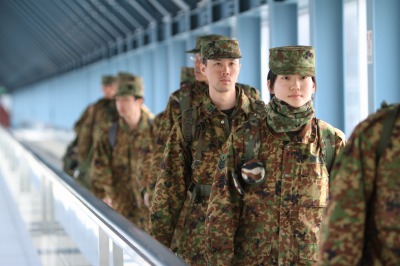
More specifically, last month U.N. chief Ban Ki-moon asked Japan to consider sending military engineers to the nation in order to fulfill the efforts that have been made until now. Even though Japanese Defence Minister Toshimi Kitazawa (who occupies this position since the presidence of former Prime Minister Naoto Kan) was reluctant to offer immediate help due to the past events that have struck the Asian country, Prime Minister Yoshihiko Noda has finally acceded to dispatch Ground Self-Defence Forces in South Sudan to take part in the U.N. peacekeeping mission.

Now that two area studies have been made in the region, Noda's Cabinet has stated that these forces will be involved in road construction (huge lack in the state) and also in road construction related to bridge work, as well as work in other areas such as Bor in the future.

Everything points to the dispatch of the forces in the beginning of the new year, if everything goes as expected.


Japanese new Prime Minister seems to be struggling in order to cope with all the stress that the management and the decision-making of a country must provide. Not only he has to bear with the whole nuclear accident situation and its consequences (which are still on the main domestic policy framework today), but also try to keep up with the race Japan is up against-a race at all levels with the rest of its neighbours, such as China or Russia- and at the same time fulfill its duties as a U.N. member state.

According to one of the ius cogens principles that appears in the Article 2 of the Charter of the United Nations, every member state will provide with help to the organization in any kind of action or mission that this may carry out in accordance with the Charter. All the members must cooperate in order to achieve and maintain peace as part of their obligations and rights.

This is probably the main reason why even if the Japanese government has other issues to solve at the moment, it yet has to contribute to achieve a better world where peace is present and the international community keeps on developing.


Syangjalis protest against river pollution


Protests against river pollution took place this past Sunday in Syangja, one of the 5 districts of Nepal. Protesters claimed that the government should take action towards the conservation of Nepal's rivers and natural sources. “Aandhikhola is being polluted by wastes dumped by municipalities, hospitals and people. Similar is the fate of many rivers in Nepal. So this program was organized to raise environmental issues,” said President of Peace for Nepal Dr Sushil Koirala.


In my opinion, the preservation of the environment must be on every government's agenda, and is of higher importance in countries such as Nepal, where most cities are poor and rely heavily on these rivers and natural resources, and in many cases have no purifying systems to prevent them from unhealthy safety conditions.

Qatari firm buys two important European Banks


Precision Capital, a Qatari firm established in Luxembourg has agreed in the last few days KBL European Private Bankers, the group that involves KBC, one of the most important Belgian banks. This deal has supposed a great relief for the bank that has reduced its risk index by releasing capital into other stronger companies. Dexia, another important European firm, has been part of this giant operation that ahs encourage the governments of Luxembourg, France and Belgium to trust European banking. Although the exact amount of the operation has not been disclosed yet, KBC’s deal could have reached over $ 1.4 billion. However, this is not the first case of Qatari investors involved such acquisitions.


With the crash of Lehman Brothers in 2008, great European banks like Barclays Bank already for support in Qatari funds in order to preserve its preponderance over the impending crisis. It is not new for anyone that Qatar is one of the richest countries in the Middle East and in the world, thanks mostly to the petrodollars. However, we see how they also stand out by its spotless economic strategy. Most of Qatar’s power relies in the fortunes of great businesses groups and in the Royal family. However, in contrast to the rest of the world, they have not seem to notice the big downfall in which all great corporations have been involved.  European and American banks, at first reluctant to the idea of joining forces with the Middle East, have found a way out of the bankrupt in countries like Qatar. And this is not only involving banking, but also other fields of business like sports, franchising and R&D. We could even say that Europe is redirecting its alliances in the long run and adapting to the new world status. But then again, we will see what the future brings and what the US has to say about all this.

New York Times

http://dealbook.nytimes.com/2011/10/11/qatar-bets-on-hobbled-european-banks/?scp=2&sq=qatar&st=cse

Gilad Shalit: Israel and Palestinians welcome deal

The long confinement of Gilad Shalit is coming to an end after the deal signed by Israel and Hamas. This Israeli soldier, kidnapped in 2006 by the Palestinian terrorists, will be freed in the next days after years of negotiations. Prime Minister Benjamin Netanyahu has agreed to free 1,027 Palestinian prisoners in two stages, 450 before the release of Shalit and 577 after. The deal has created a big controversy in Israel. The entire country is happy for the release of one of its best known faces and see the deal as something necessary, but many of them see the deal as a surrender to the terrorists and argue that the government has brought Israel to its knees.


When a group of terrorist blackmails a whole country by kidnapping one of their citizens, public opinion reacts in most of cases in favor of the agreement following their feelings, but more things should be taken into account, such as what will happen with the released prisoners and the ability of the terrorists to repeat the blackmail. One close example is the case of Miguel Angel Blanco, a basque politician assassinated by ETA in 1997 after been kidnapped for 48 hours, when the Spanish government of José María Aznar rejected to gave in to the assassins. Spanish society and even the relatives of Blanco understood the position of Aznar and supported him against ETA. On the contrary, we will be able to see in the next days people like Naser Yataima —killer of 30 civilians in an attack to the Hotel Park in Netanya— or Musab Hashlemon —author of the attack to a bus in Beersheva that killed 16 people— walking freely in the streets of Palestina.

Source: http://www.bbc.co.uk/news/world-middle-east-15273206